N.B.H. ON
Coach: Marius Lumpan
Team: Stefan Paici 8 yo, Darius Cimpian 10 yo, Andrada Bratescu 13 yo, Iulia Lumpan 14 yo, Alexadru Burgui 14 yo, Lukas Stancescu 14 yo, Andrei Carstian 13 yo, Stefan Mitoiu 14 yo
Awards: 1st place in FLL Into Orbit challange ROMANIA (17.03.2019)
Contact: inventikasensoron@gmail.com
During their space missions, astronauts face many complicated problems. One of the most complex ones is tied to the lack of gravity or the presence of microgravity. Our body has evolved for thousands of years in normal gravity conditions on the surface of Earth (1G), and its absence has unexpected effects.
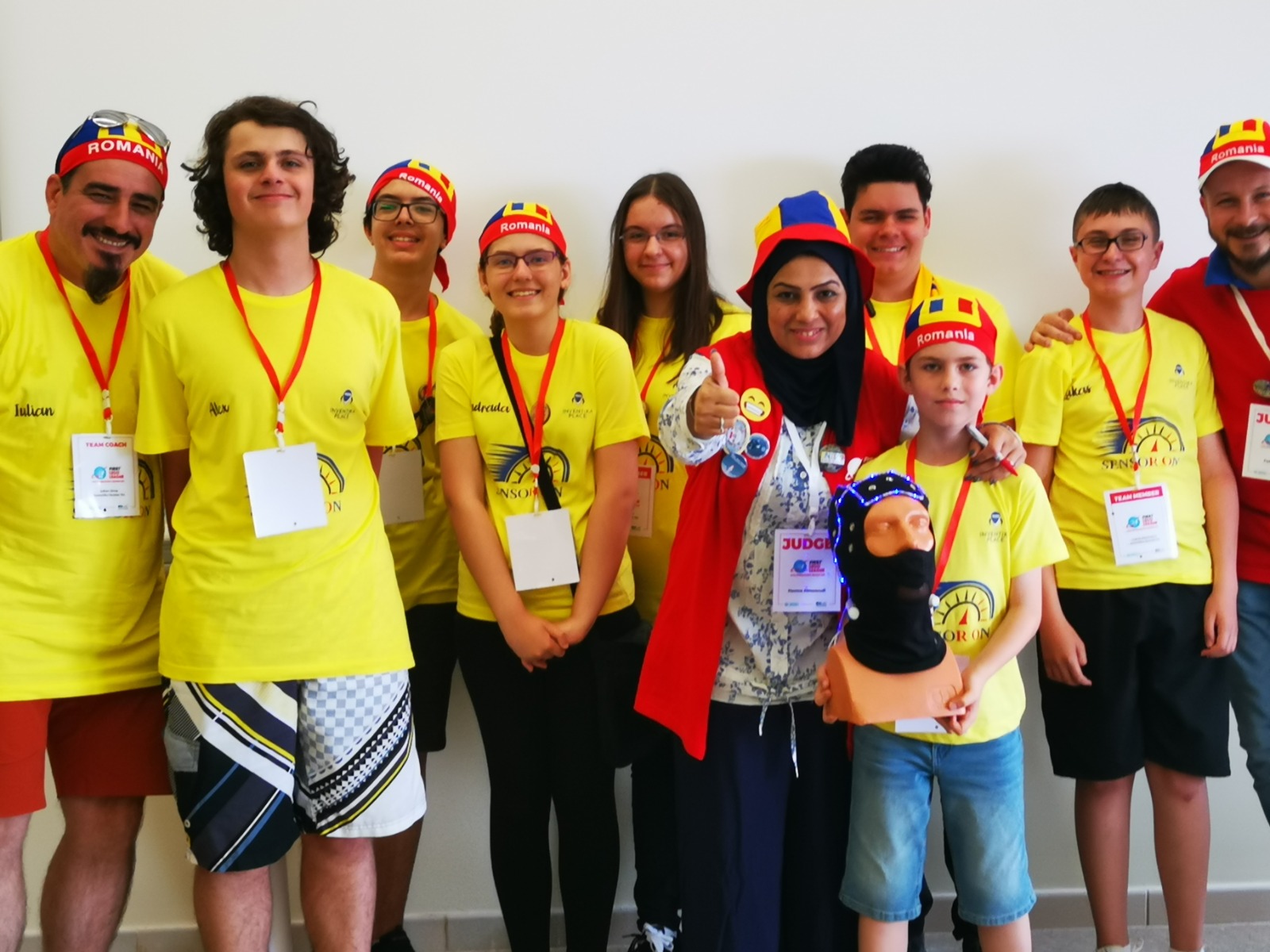
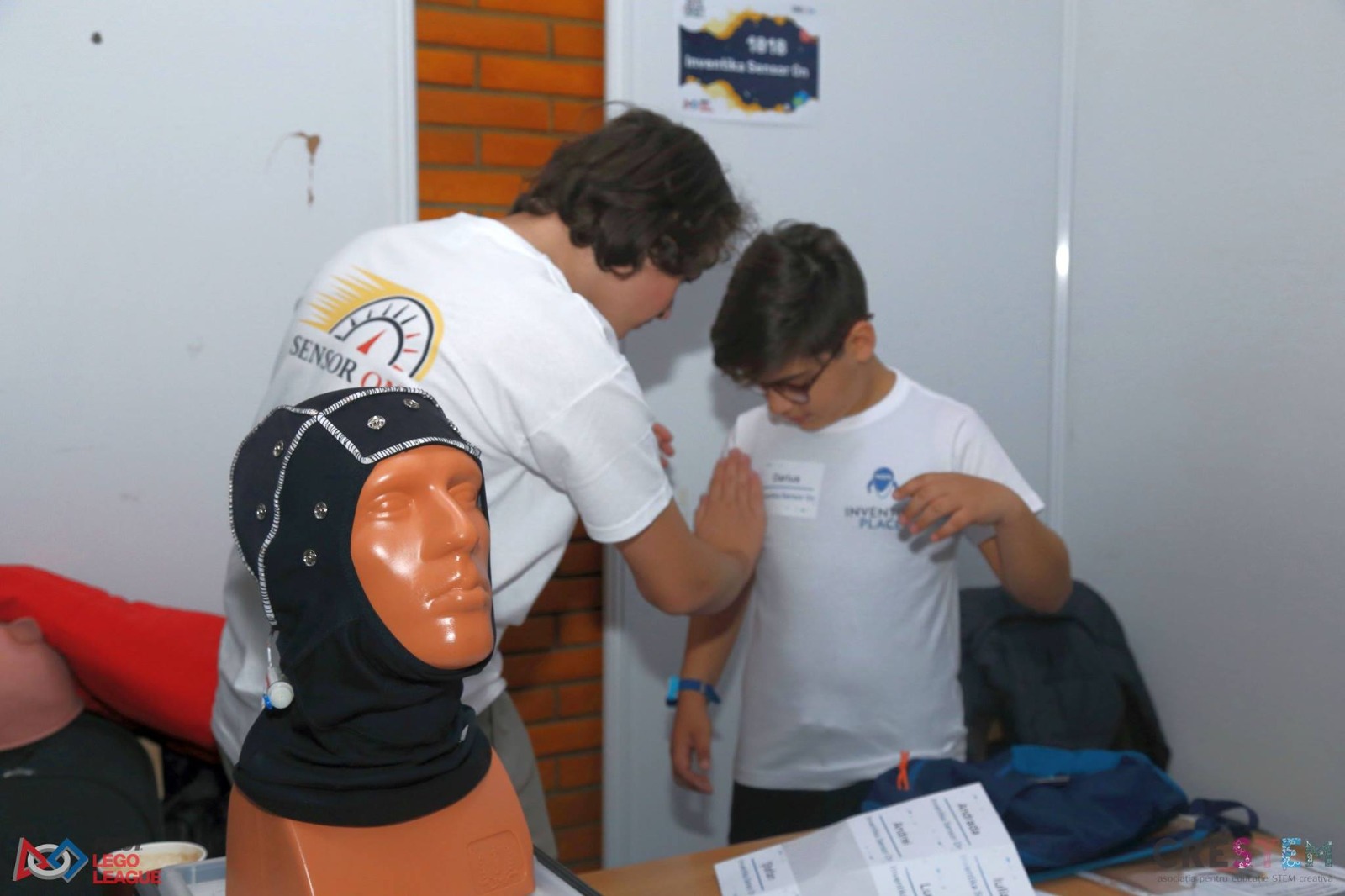
Our mannequin "Ghita", wearing the NBH
When they are in space, astronauts suffer the Charlie Brown effect or Puffy Head Bird Legs syndrome. Those who suffer from this syndrome have their faces swollen and their legs get thinner. In addition to this it can lead to foggy vision, due to high pressure. Furthermore, the Blackout symptom could appear, and this could put astronauts in great danger. Researcher Damian Bailey, professor of psychology and biochemistry at University of South Whales, after a study, he explained that some parts of the brain receive too much blood in low gravity conditions. This way the arteries conduct blood to the brain relax and they open too much. Because of that, the brain is overwhelmed and the edema appears – the accumulation of water in the tissue, which leads to its expansion, and the oxygen cannot travel to certain parts of the brain fast enough. That’s why astronauts often experience problems with their cognitive skills when they’re in space. To understand better the problem we’re confronting, we went through multiple stages. First of all, we started an individual study on the Internet and we identified multiple problems, from which we selected one that was more important. We then visited the neuropsychology lab at the Biology College, where we tested equipments of electroencefalogram and neurobiofeedback. Iulia: We participated at the “Steps into Space”, held at the Atheny, where Bogdan Marcu, propulsion engineer, ex-coworker at SpaceX and Rocketdyne has presented to us aspects about space exploration.
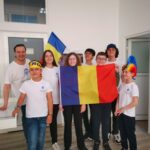
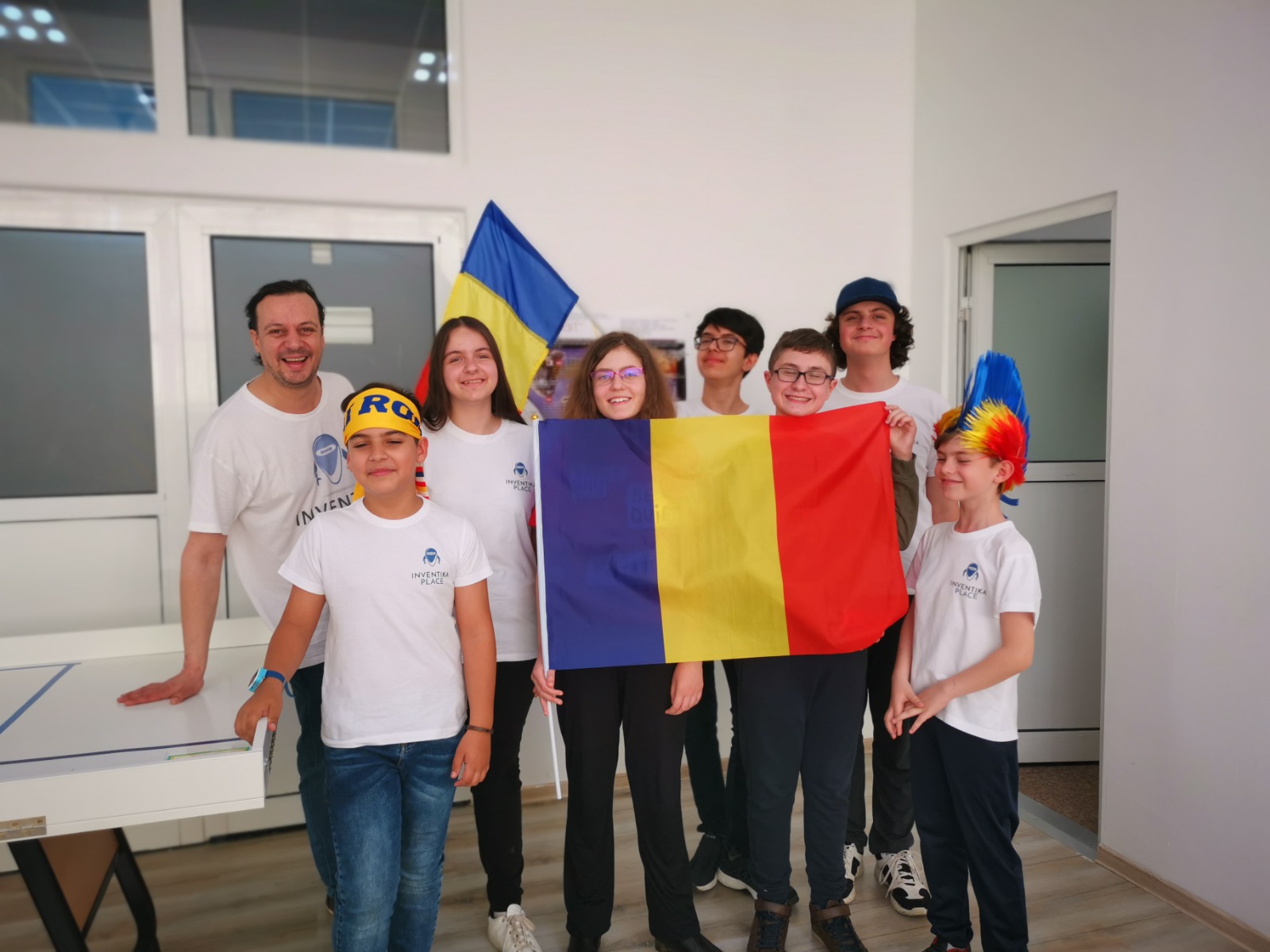
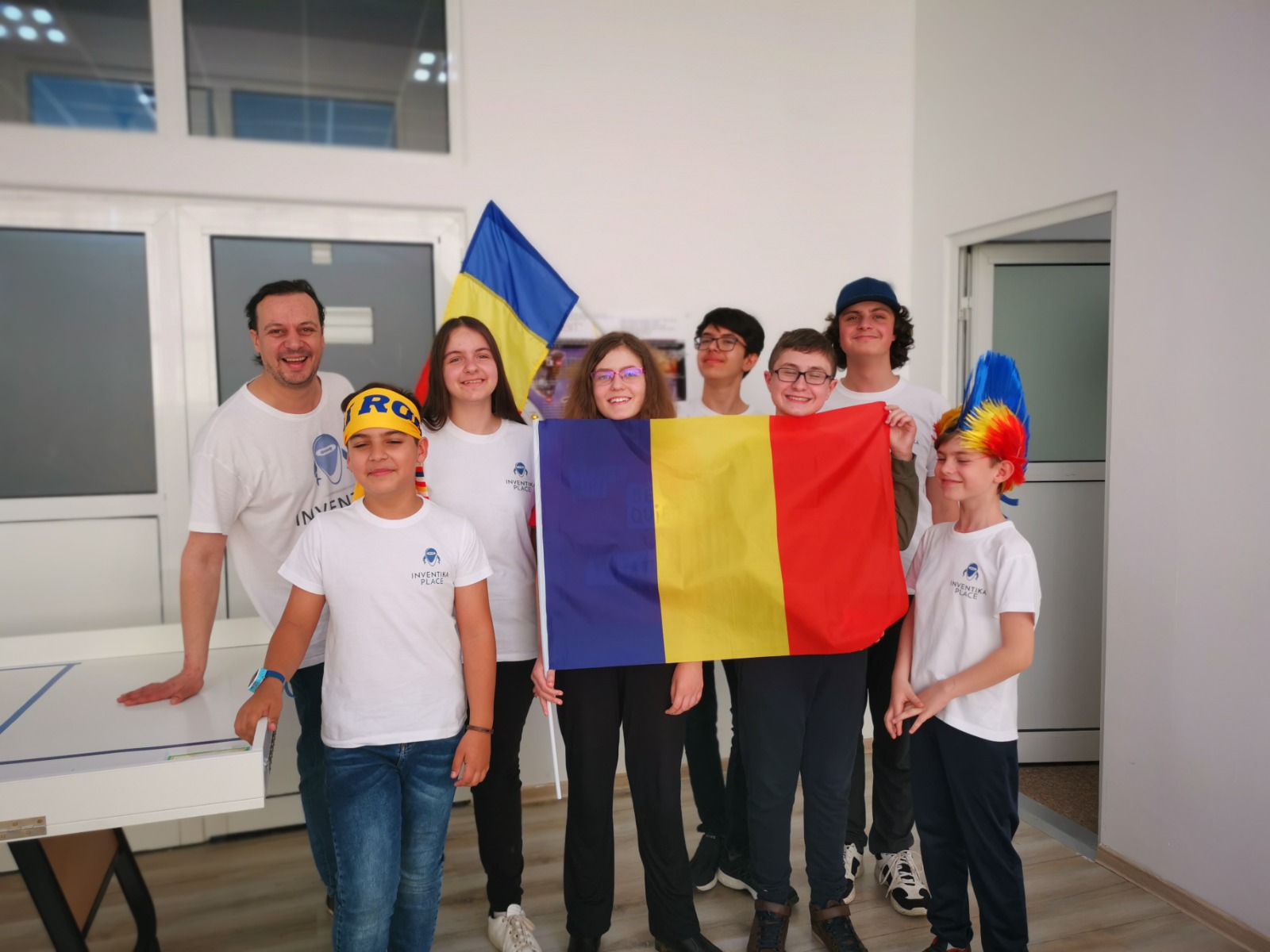
Team photo
We went to the Institute of Space Studies, where we presented our research project in front of
specialists and of 5 other teams, which gave us a helpful feedback. And I had the occasion of visiting
the NASA museum from Florida, where I found out a lot about space travel.
Andrei: During our research, we also had other ideas. Unfortunately, these couldn’t be implemented.
We thought of building an environment with artificial gravity
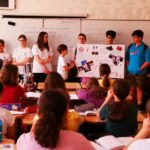
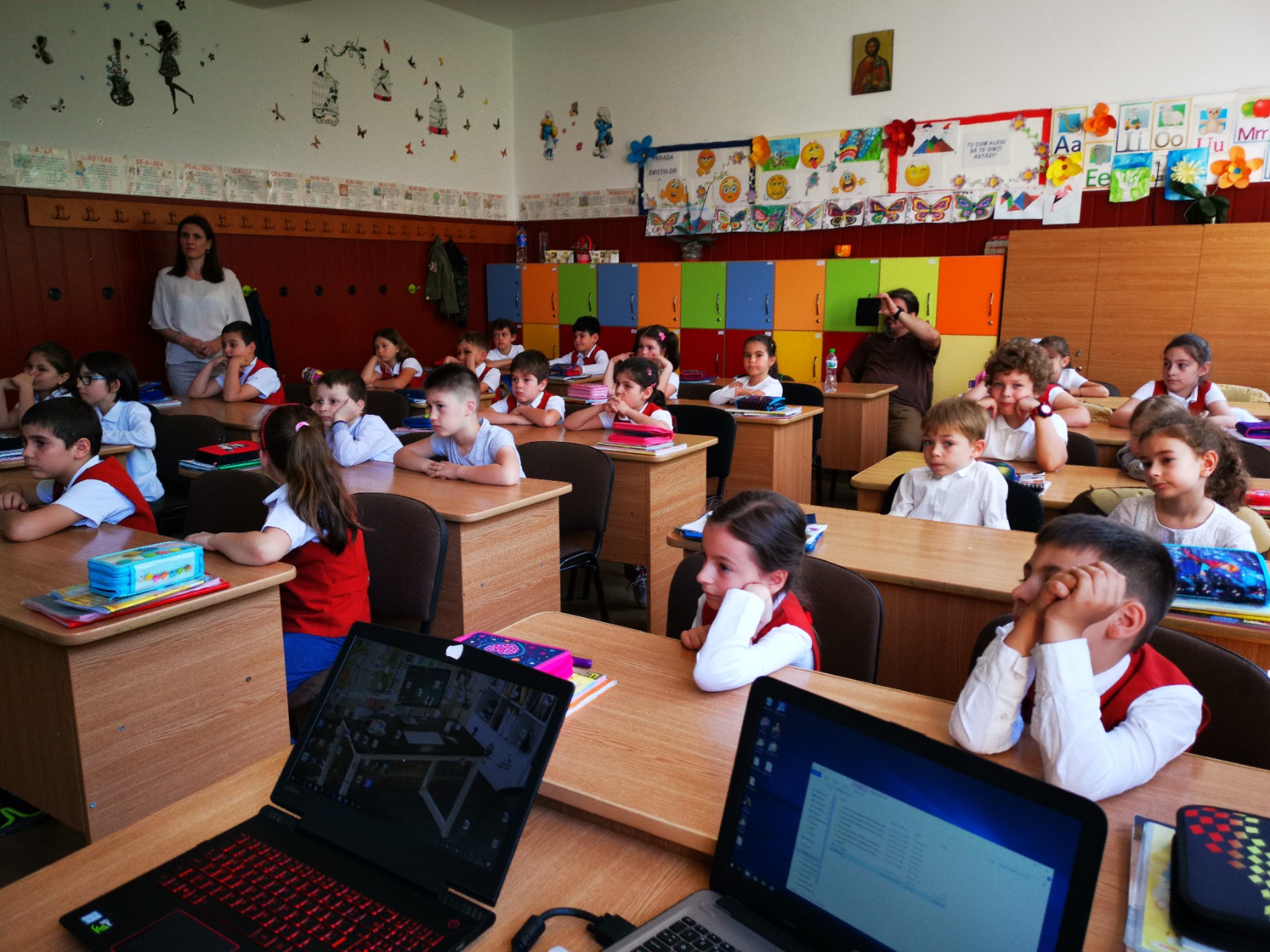
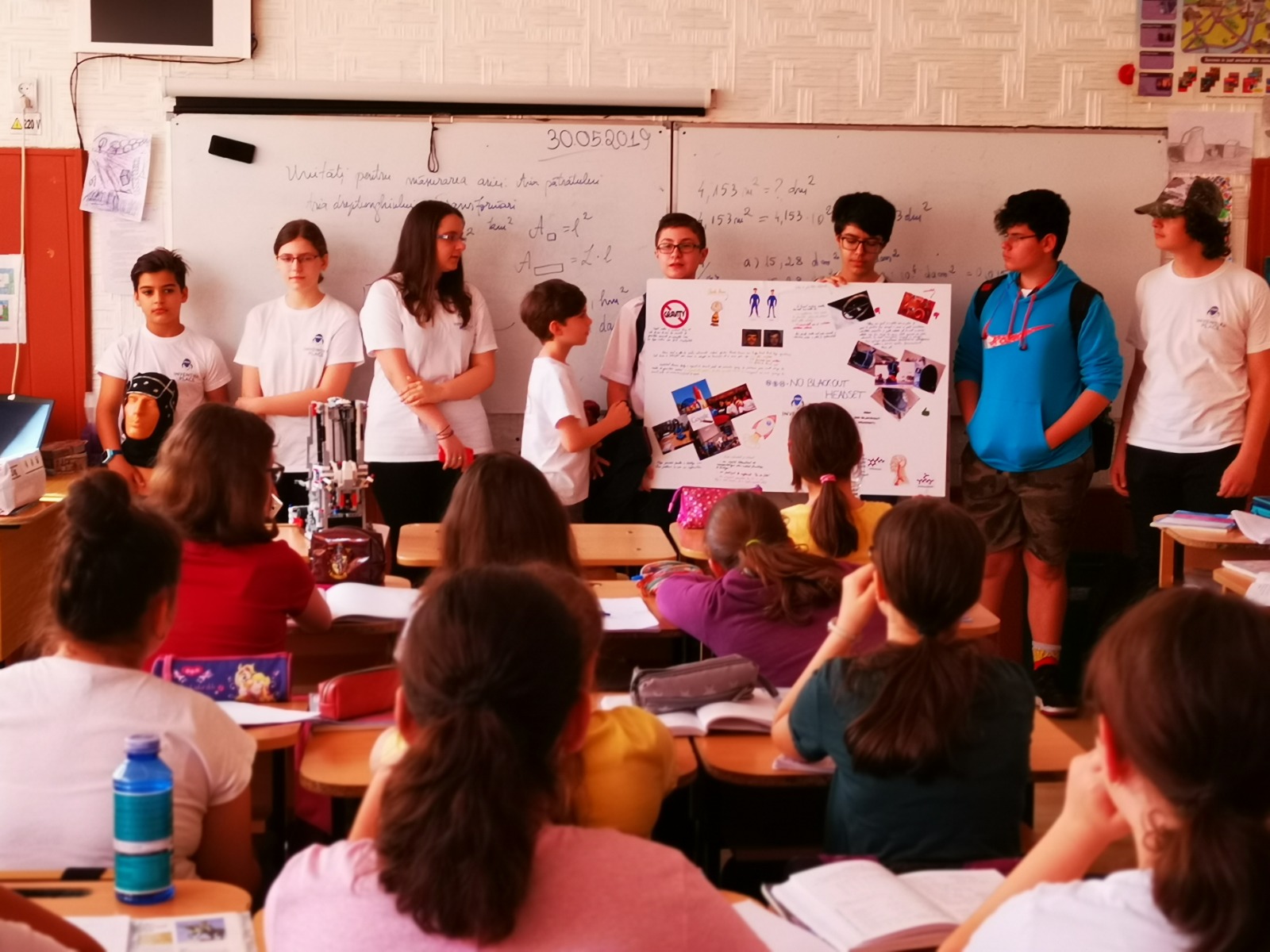
Presentation of our project in schools
During our research, we had multiple ideas:
-building an environment with artificial gravity, using the Centrifugal Force
-nanobots that could control the dilatation of the arteries
Unfortunately, these ideas are too advanced and expensive to be implemented.
However, we found a solution that can be used. We created a headset that can monitor the brain’s activity and can control how much the arteries dilate that conduct blood to the brain. Some sensors will alert the astronauts in case of the exaggerated accumulation of blood. Small injectors administrate adrenaline or nitroglycerin to prevent the appearance of the Black-Out phenomenon.
Adrenaline is a hormone secreted in case of stress. It prepares the organism for “fight or flight” and has strong effects on blood circulation and muscles.
Nitroglycerin is used in treating various heart diseases and can counteract the exaggerated effects of adrenaline.